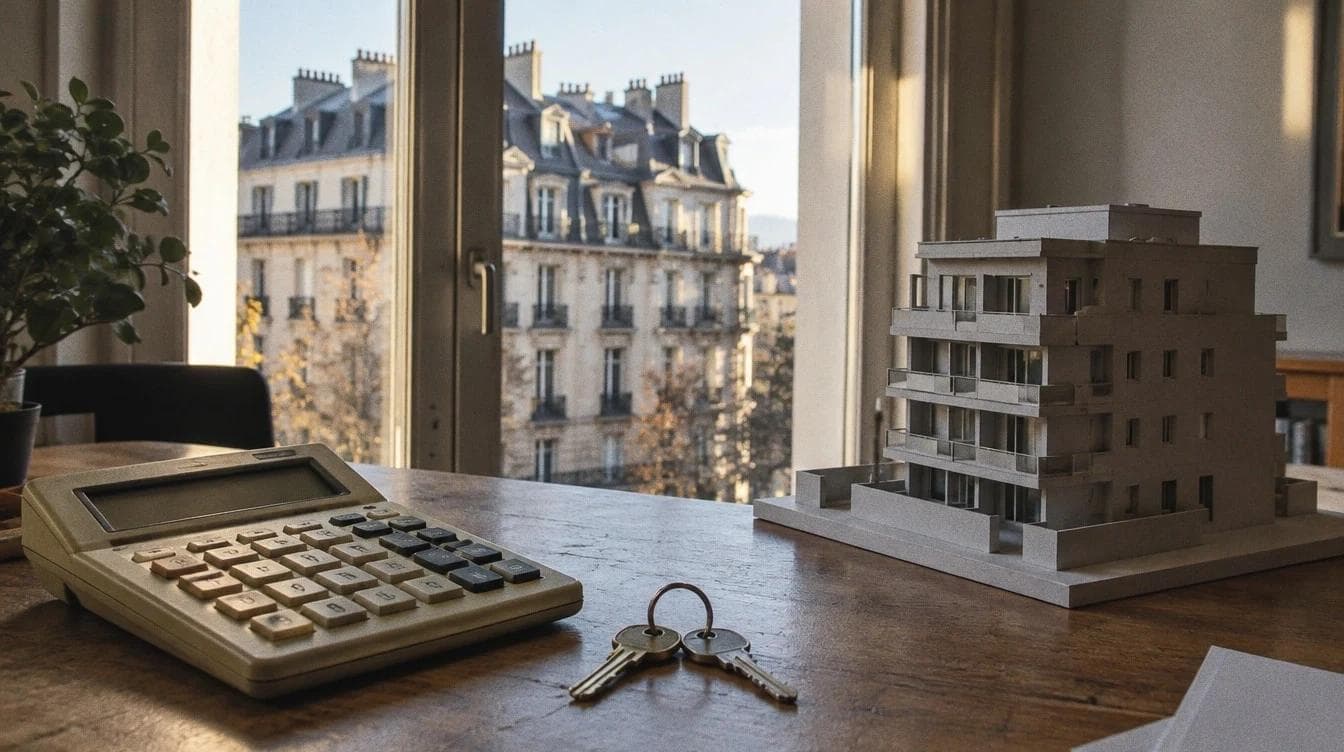
If you own property in Switzerland, knowing its true value is one of the most important financial insights you can have. Whether you plan to sell, renovate, or simply track your investment, understanding how to estimate home value is essential.
In markets like Geneva, where prices hinge on precise local data, guesswork can lead to costly mistakes—either undervaluing your home or overestimating equity when refinancing.
This guide explains the three main methods professionals use to determine property worth, the key factors influencing Swiss house prices, and the steps to get an accurate valuation. Knowing how to estimate home value helps you make smarter, more confident real estate decisions.
Let’s explore how to do it right.
What Is Home Value?
Home value is not a single, fixed figure; rather, it’s a representation of what a knowledgeable buyer is willing to pay for a property in the open market. Numerous transient and permanent factors influence this figure.
It's crucial to understand the difference between the most common valuation types in the Swiss context.
Market value is the price your property is expected to fetch in a competitive transaction, assuming a reasonable sale period. This is the figure that truly matters to sellers and buyers.
Appraised value is the professional opinion of a licensed valuer, typically required by lenders for mortgage purposes. This figure is calculated using precise methodologies.
Tax value is often significantly lower than market value and is used solely by municipal authorities to calculate property taxes. Do not rely on this figure for selling or refinancing.
Knowing your home’s value is vital before selling, as it enables you to set an optimal listing price that maximizes profit and speeds up the sale. Similarly, if you plan on refinancing, the appraised value determines the equity available to you.
How to Estimate Your Home Value? 3 Key Approaches
How to estimate your home value
Professional appraisers rely on a combination of three primary valuation approaches to provide a balanced and justifiable property value. Understanding these approaches helps you follow the logic behind any professional home appraisal process.
Comparative market analysis (CMA)
The Comparative Market Analysis, or CMA, is the most common method used for owner-occupied residential properties. It is based on the economic principle of substitution.
The process involves meticulously comparing your property to similar homes—or “comps”—that have recently sold in your immediate area. These comparable properties must be highly similar in size, age, condition, and location.
Adjustments are then made for any differences between the comp and your property. For instance, a comp with a newly renovated kitchen would require an upward adjustment to the value of your property if yours lacks that feature.
Income approach
The Income Approach is primarily used for properties that generate or could generate rental revenue, making it vital for investors in Switzerland. This method estimates value based on the property’s future income potential.
The fundamental calculation often involves determining the Net Operating Income (NOI) and applying a market-derived capitalization rate (Cap Rate). This approach provides a clear-eyed view of the investment's profitability.
For those interested in long-term financial planning, the income approach is key to determining if a rental property acquisition is worthwhile. It helps forecast returns and establish a fair purchase price based on investment metrics.
Cost approach
The Cost Approach is most frequently used for new construction, unique properties, or for insurance valuation purposes, particularly within the context of Swiss building standards. This methodology is based on the principle of contribution.
It calculates value by summing the estimated cost of replacing the structure (reconstruction value), less any depreciation, and then adding the land value. The idea is that a buyer would not pay more for an existing property than the cost of building an equivalent new one.
Land valuation, which can be particularly high in urban centers like Geneva, is typically determined by comparing recent sales of similar vacant parcels. This holistic view provides a reliable baseline for complex or recently built assets.
Key Factors Affecting House Prices
In Switzerland, property values are extremely sensitive to a range of local and national factors, going far beyond simple square footage. These key factors affecting house prices are what differentiate a good valuation from a great one.
Location and neighborhood appeal
Location remains the undisputed champion among factors affecting house prices in Switzerland. Proximity to major employment hubs, like the vibrant financial district of Geneva, significantly drives up demand and pricing.
The quality of local amenities, including schools, public transport links (such as the CFF network), and recreational areas, is deeply integrated into buyer valuations. A quiet, well-maintained neighborhood will always command a premium.
Size, layout, and usable floor space
While size matters, the layout and how space is utilized are equally important to Swiss buyers. Properties with efficient, modern floor plans that maximize natural light are consistently valued higher.
The official usable floor space (Surface Utile) and the gross floor area (Surface de Plancher) are key metrics in any valuation. Buyers seek well-balanced homes with adequate storage and balcony or terrace space.
Renovations and property condition
Recent, high-quality renovations that adhere to local building codes add significant value. Buyers are often willing to pay more for homes that require minimal immediate maintenance or modernization.
However, older, well-maintained properties with preserved architectural integrity can also command high prices, particularly in historical areas. The appraiser will conduct a detailed condition assessment during the professional home appraisal process.
Energy efficiency and sustainability standards
Energy efficiency is no longer a luxury but a necessity in Switzerland, impacting a property's long-term operational cost. The official CECB (Certificat Énergétique Cantonal des Bâtiments) rating plays a decisive role.
Highly efficient heating systems, superior insulation, and solar installations are major factors affecting house prices. They translate directly into lower utility bills and a smaller carbon footprint, appealing to modern Swiss sensibilities.
Market trends in Geneva and across Switzerland
Switzerland’s housing market continues to show resilience in 2025, thanks to low interest rates, steady economic conditions, and strong demand.
The Swiss National Bank (SNB) cut its key policy rate to 0 % in June 2025, following previous reductions this year. It means that Swiss homeowners can now take out cheaper mortgages or refinance their loans at lower rates, encouraging continued activity in the housing market — and therefore keeping home values stable or increasing slightly.
In the canton of Geneva, limited supply and high demand continue to push prices upward. For example, average residential prices reached CHF 15,523 /m² in mid-2025 in the region.
Additionally, the national outlook suggests modest price rises for 2025 – for instance, condominiums are expected to increase about 3.4 % and single-family homes about 3.0 % in Switzerland as a whole.
For homeowners in Geneva, these trends mean:
Financing conditions are very favorable (thanks to low interest rates), so demand remains strong.
Because supply is tight and competition is international, accurate estimation of your home value is even more important.
The market is stable but not skyrocketing — large leaps are unlikely, so setting realistic expectations is key.
How to Calculate Property Worth Yourself?
While nothing can replace a professional’s expert eye, you can still gain a very good initial estimate of how to calculate property worth using available public data and analytical tools. This step is vital for preliminary planning.
First, focus on collecting real Swiss market data, which is far more reliable than generic European indices. Look specifically at official property registers and established real estate portals to gauge the local climate.
For a city like Geneva, a great starting point is to look up the average home prices in Geneva per square meter for specific districts. This data, often published by municipal or cantonal offices, provides a solid baseline for comparison.
To deepen your understanding of the broader housing market, you can consult reliable sources like the Swiss Federal Statistical Office (FSO). Their regularly updated housing statistics offer valuable macroeconomic context for your local valuation efforts. This provides a trusted external benchmark of the overall market.
Leveraging online property valuation tools is the next step. Many Swiss banks and specialized real estate firms offer free online tools that use automated valuation models (AVMs). These tools can give you a rough figure in minutes.
While convenient, remember that AVMs do not account for your property's unique charm, interior condition, or specific neighborhood micro-location. Use them to get a range, but never as the final, definitive estimate.
Professional Home Appraisal Process
Professional home appraisal process
For critical decisions—such as selling, securing a mortgage, or settling an estate—the professional home appraisal process is mandatory. This rigorous procedure ensures accuracy and compliance with legal standards.
Step 1: Schedule an appointment with a certified appraiser
The first action is to find a licensed valuer or expert immobilier in Switzerland. Ensure they hold recognized certifications and, critically, have recent experience specifically in your canton, such as Geneva.
You should provide the appraiser with all relevant documentation in advance, including the official property type, exact location, and the precise purpose of the valuation. This preparation streamlines the subsequent steps.
Choosing a local expert like Immobilière Genevoise matters because their deep understanding of local market movements and specific regulatory requirements is invaluable. We invite you to learn more about our comprehensive services and approach on our firm's main site.
Step 2: On-site property inspection
The appraiser will conduct a thorough on-site property inspection, which is the most critical stage of the professional home appraisal process. They are there to verify all the physical attributes of the property.
The valuer meticulously checks size, overall condition, existing layout, any recent upgrades, and the all-important energy rating (CECB). This is where the subjective elements of condition are turned into objective adjustments.
Ensuring your home is well-maintained and cleanly presented before the inspection can subtly influence the appraiser's perception of its overall condition and care. Every detail contributes to the final assessment of property worth.
Step 3: Market data analysis and price comparison
Following the inspection, the professional delves into the market data, a critical step that demonstrates how to estimate home value using comparable sales. This involves examining recent "comps" in Geneva that have closed within the last six months.
Crucially, the appraiser adjusts the value of these comparable sales to accurately reflect differences with your property. They factor in variations in property age, construction materials, condition, and location differences down to the street level.
Step 4: Valuation report and final estimate
Once the analysis is complete, you receive the official Valuation Report. This comprehensive document details the valuation method used (CMA, Income, or Cost), the market data reviewed, and supporting photographs.
The report provides the final, official estimate of your property’s worth. The turnaround time typically depends on the property's complexity and the appraiser's availability, but a reliable timeline is provided upfront.
Step 5: Review and next steps
Once you receive the report, take the time to review the appraised value alongside the stated assumptions and market rationale. This value is a strong basis for setting an asking price or planning a financial strategy.
It is wise to request an update or a second opinion if significant time has passed or if there have been major market shifts since the original report. This is especially true before entering into a final sale agreement or mortgage renewal. To obtain a truly precise professional home appraisal process and estimate, we recommend our specialized service.
Common Mistakes in Home Valuation
Even seasoned sellers can make simple errors when trying to determine how to estimate home value. Avoid these common pitfalls to keep your pricing realistic and market-appropriate.
Mistake #1: Letting emotions cloud your estimate
It is natural to assign a high emotional value to your home based on memories or personal effort put into it. However, buyers and lenders rely purely on objective market data, not sentimental attachment.
Be brutally honest about your property’s flaws and remember that a buyer will likely not pay a premium for features you personally love but which lack broad market appeal. Objectivity saves time and frustration.
Mistake #2: Ignoring renovation or repair costs
A common mistake is overvaluing past renovations without accounting for their market-specific depreciation or current condition. Furthermore, sellers often fail to deduct the cost of necessary deferred maintenance or major repairs.
Buyers will factor in the cost of a new roof or heating system, and so must you when establishing your initial asking price.
Mistake #3: Using outdated or foreign data sources
The Swiss real estate market is highly localized and moves quickly. Relying on property sales from a year ago or data from neighboring countries like France or Germany will result in an inaccurate estimate.
Always use the freshest, hyper-local data from the specific neighborhood in which your property is located.
Mistake #4: Forgetting to verify zoning or building restrictions
Building regulations and zoning laws (for instance, those restricting the expansion of living space) are critical factors affecting house prices. What you can or cannot build on your plot directly impacts its potential value.
Always verify current and potential restrictions, as failure to do so can lead to disputes and a significant last-minute devaluation during due diligence. For more technical details on Swiss housing laws, the legal and economic blog of a major Swiss newspaper can be a helpful, reliable resource.
When to Get a Professional Valuation?
Estimating your home’s value on your own is a good starting point, but whenever the number has financial or legal weight, a professional valuation becomes essential.
Accuracy matters most when preparing to sell — even a small mispricing can lead to lost profit or a slower sale. The same applies to refinancing or legal procedures such as inheritance or divorce, where only an official appraisal is recognized.
In any case involving a bank, court, or tax authority, a certified valuation report is the only reliable and defensible document.
Immobilière Genevoise offers trusted local expertise in Geneva’s property market. Our certified valuers use real-time market data and Swiss-compliant standards to provide precise, professional valuation reports you can rely on.
Get Your Precise Geneva Property Valuation Today
Skip the generic online tools. Our Geneva experts deliver certified valuations based on real market data, so you know your home’s true worth.
FAQ
The duration of the professional home appraisal process can vary, but generally, the on-site inspection takes 1-2 hours. The final, official valuation report is usually delivered within 7 to 10 working days after the inspection, depending on the complexity of the asset and the current appraiser workload.
Yes, absolutely. In the current Swiss market, a superior CECB energy rating (A or B) is a significant factor affecting house prices. Buyers recognize that better energy efficiency translates directly into lower operating costs and a future-proofed asset, often leading to a measurable increase in market value.
No, the original purchase price is almost always different from the current market value. The market value changes constantly based on local supply and demand, interest rates, and all the factors affecting house prices that we have discussed. The only way to know the current market value is to perform an up-to-date valuation.
Conclusion
Determining how to estimate home value correctly is a blend of scientific methodology and local market art. By understanding the three key valuation approaches—CMA, Income, and Cost—you are well-equipped to perform an intelligent initial assessment.
However, when facing major financial decisions, the comprehensive professional home appraisal process remains the gold standard. It cuts through the emotional noise and provides the objective data necessary to navigate the dynamic Swiss real estate market successfully. Knowing how to calculate property worth gives you the ultimate advantage.
Whether you are selling or looking to rent out your property, our Geneva team is here to help.Whether you are selling or looking to rent out your property, our Geneva team is here to help.